You'll Post Anything Except the Truth: The Strange New Rules of American Oversharing

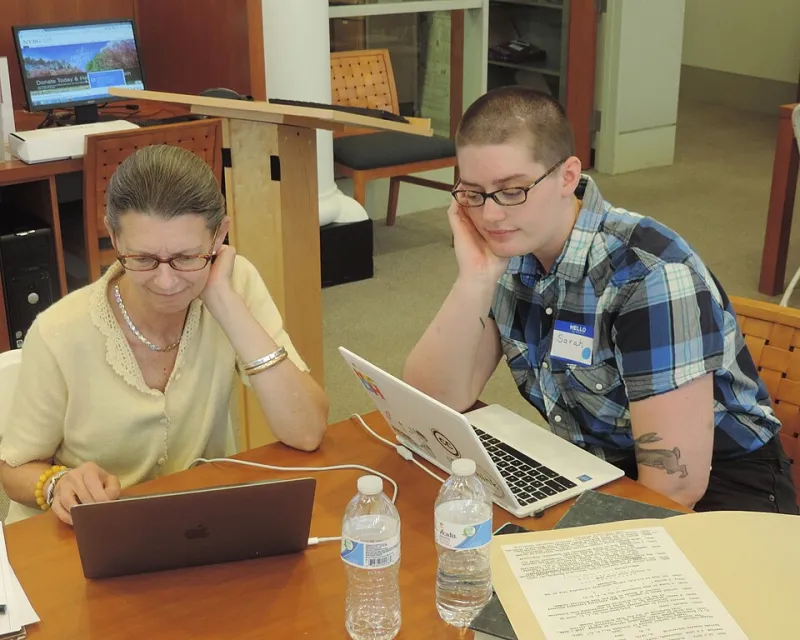
Photo: Lu Zhi, CC0, via Wikimedia Commons
You've seen the carousel. Maybe you've made one. The aesthetic kitchen shot, the gym check-in, the soft-focus photo of someone's journaling spread with a caption that reads, "learning to be present." We are, by almost every measurable standard, the most publicly documented generation in American history. And yet — ask someone how they're really doing, and you'll usually get a shrug, a pivot, or a very rehearsed version of "honestly, just busy."
That tension — between how much we share and how little we actually reveal — is what researchers are starting to call the confidence gap in vulnerability. It's not that people are hiding. It's that they've gotten incredibly good at performing openness while keeping the actual hard stuff completely off the table.
The Performance of Being an Open Book
Social media platforms didn't invent oversharing, but they did give it a scoreboard. Likes, comments, saves, shares — every piece of content you put out gets instant feedback, and your brain, wired for social approval, takes notes. Over time, you learn what kind of sharing lands. A photo of your new apartment? Applause. A vague, aesthetically framed caption about "going through something"? Sympathy and DMs. An unfiltered breakdown about your mounting credit card debt or the fact that you haven't talked to your best friend in six months because of something neither of you will name? Crickets — or worse, awkward silence.
So you stop posting that last one. Not consciously. It just... doesn't make the cut.
Dr. Sherry Cohn, a clinical psychologist based in Chicago who works extensively with young adults, puts it bluntly: "What I see constantly is people who have a very polished vocabulary for talking about their emotional lives in abstract terms — 'I'm working on my boundaries,' 'I'm in a healing era' — but who genuinely struggle to say something concrete and specific, like 'I feel like a failure at my job and I'm terrified to tell anyone.'" The language of wellness, she notes, has become its own kind of armor.
Why We Mistake Disclosure for Depth
Here's the counterintuitive part: the more you share, the more isolated you can actually feel. That's not just a hunch — it's showing up in the data. Studies tracking social media use alongside reported loneliness consistently find that volume of sharing doesn't predict connection. What predicts connection is reciprocal vulnerability — the messy, unscripted kind where you say something real and someone says something real back.
What platforms optimize for isn't that. They optimize for content that performs. And real problems — the kind that don't have a resolution arc yet, the kind that are still ugly and unresolved — don't perform well. There's no satisfying ending to post. No glow-up photo. No "what I learned from my rock bottom" reel when you're still at the bottom.
Social media researcher Dr. Marcus Webb, who studies digital identity at a university in the Pacific Northwest, describes it this way: "We've created environments where disclosure is encouraged but depth is penalized. You can tell people everything about your surface life and nothing about your interior life, and the platform will reward you either way. That's a problem, because humans need the interior stuff to actually feel known."
The Loneliness That Looks Like Connection
This is where it gets a little uncomfortable. Because a lot of Americans — particularly in the 25-to-40 demographic — genuinely believe they have strong social networks. They have followers. They have group chats. They have people who would absolutely show up if something went wrong. But when something does go wrong, they don't tell those people. They post something vague. They say they're fine. They wait for someone to notice, and when no one does, the isolation gets heavier.
This isn't a character flaw. It's a learned behavior. We've been trained, very efficiently, to keep our sharing aspirational or at least relatable — which is a specific kind of curated, not-too-messy relatable. The problems that are truly hard to talk about — mental health crises, financial shame, relationship failures, grief that's gone on longer than feels socially acceptable — those get filed away. Dealt with alone, or not dealt with at all.
A 2023 Cigna survey found that more than half of American adults report sometimes or always feeling like no one knows them well. Half. In a country where people are posting every meal and every mood.
What Actual Vulnerability Looks Like (Hint: It's Awkward)
The word "vulnerability" has had a good decade in the American cultural conversation — largely thanks to researchers like Brené Brown making it accessible and, honestly, a little trendy. But somewhere in the translation from research to Instagram caption, it got smoothed out. Real vulnerability isn't a quote graphic. It's not a well-lit confessional video where you've already processed the hard thing and can talk about it with wisdom and distance.
Real vulnerability is saying something before you know how it ends. It's telling a friend you're struggling without a narrative arc attached. It's the discomfort of not performing okayness, in real time, with actual consequences.
And that — that specific flavor of exposure — is what most of us are quietly terrified of. Not because we're weak, but because we've had very little practice. The digital environments we spend most of our social energy in don't require it. They don't even particularly reward it.
Breaking the Pattern (Without Deleting Your Apps)
None of this is an argument for logging off forever or turning every coffee catch-up into a therapy session. It's more of a nudge toward noticing the gap between what you broadcast and what you actually carry.
A few things that researchers and therapists suggest actually help:
Say the specific thing. Not "I've been struggling," but what you've actually been struggling with. Specificity is what creates real connection — it gives the other person something to respond to honestly.
Find one person, not an audience. The intimacy you're looking for doesn't scale. It lives in individual conversations, not comment sections.
Let it be unresolved. You don't have to have a lesson or a takeaway. Sometimes the most connecting thing you can say is "I don't know how to fix this yet."
Notice the performance. Next time you're crafting a caption or a story, ask yourself what you're leaving out — and whether that thing might actually be worth saying out loud to someone.
The paradox at the center of all this is almost funny, if it weren't so exhausting: we have more tools to communicate than any previous generation, and we're using them to build elaborate, beautiful facades of openness. The real stuff — the actual texture of our lives — is still sitting in the drafts folder.
Maybe it's time to hit send on a different kind of post. Or better yet, just call someone.