Say 'I Have No Clue' and Watch Everyone Lean In
Photo: Jim.henderson, CC0, via Wikimedia Commons
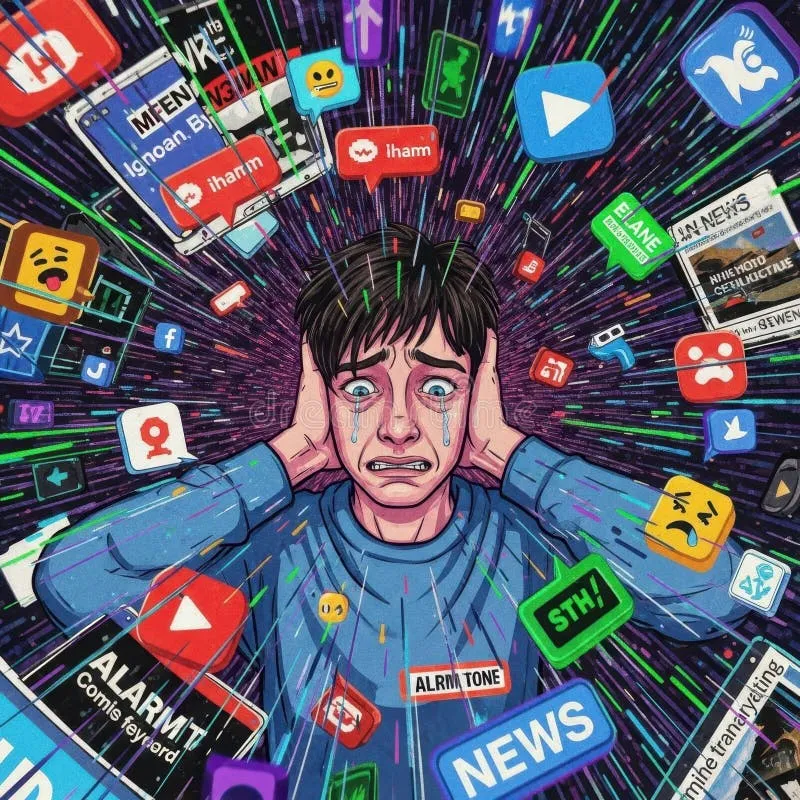
There's a certain kind of person at every dinner party, every Zoom call, every comment section. They've got an opinion on the Fed's interest rate policy. They've got thoughts on that Netflix documentary everyone watched over the weekend. They can pivot from cryptocurrency to crop rotation without taking a breath. They are exhausting. And somewhere deep down, they know it.
America spent the last decade building a culture where having no opinion was practically a character flaw. Social media turbocharged it. Suddenly, staying quiet on a topic felt like cowardice. Uncertainty read as weakness. And the algorithm rewarded the loudest, most confident voice in the room — not the most accurate one.
But something is shifting. Slowly, awkwardly, kind of beautifully.
The Expertise Bubble Is Getting Tired
Let's be honest about what the cult of expertise actually produced. It gave us a generation of people who feel genuinely stressed if they don't have a position on things they learned about forty-five minutes ago. It created podcasts where hosts speak with total authority on topics they Googled during the intro music. It made "doing your own research" a punchline and a crisis at the same time.
The pressure to perform knowledge — rather than actually have it — is a real psychological burden. Researchers who study intellectual humility have found that people who feel compelled to project confidence in areas where they're uncertain report higher anxiety and lower satisfaction in conversations. You're not just faking it. You're wearing yourself out doing it.
And audiences? They can usually tell. Maybe not consciously, but there's a reason the know-it-all energy in a room makes people subtly check their phones.
What 'I Don't Know' Actually Sounds Like
Here's the thing nobody tells you: saying I genuinely don't know enough about this is not a conversation ender. It's often a conversation starter.
Think about the last time someone said that to you with real sincerity. Not as a dodge, not as false modesty, but as an actual admission. It probably made you curious about them. It might have made you want to figure it out together. There's a reason Socrates built an entire philosophical tradition around pretending not to know things — it pulls people in.
Online, this is playing out in interesting ways. Some of the most-followed creators in spaces like science communication, personal finance, and even politics have built their audiences not by being the smartest person in the room, but by being the most honest about the edges of what they understand. They say things like this is where my knowledge gets fuzzy or I read three conflicting things on this and I still don't know what to believe. And people love them for it.
Because it's real. And real is increasingly rare.
The Social Currency of Intellectual Humility
Psychologists have a term for this: intellectual humility. It's the ability to recognize that your knowledge and opinions are limited, potentially wrong, and always subject to revision. And despite sounding like something you'd embroider on a throw pillow, it's actually a pretty radical stance in the current media environment.
Studies out of places like Duke and UC Davis have found that people with higher intellectual humility are better at evaluating evidence, less likely to fall for misinformation, and — here's the part that matters for this conversation — rated as more trustworthy and likable by the people around them.
In other words, the science says what your gut already suspected: the person who admits uncertainty is more interesting than the person performing certainty.
There's a social mechanics thing happening here too. When you admit you don't know something, you're implicitly inviting the other person into a shared exploration. You're saying let's figure this out instead of let me explain this to you. One of those is a conversation. The other is a TED Talk nobody asked for.
Why This Is Hard in America Specifically
It would be unfair not to acknowledge that this is genuinely difficult in a culture where confidence is so deeply tied to credibility. American professional culture, in particular, has long equated hesitation with incompetence. Job interviews, boardrooms, sales calls — they're all environments that reward projecting certainty even when you're winging it.
And there's a real class and race dimension here too. Intellectual humility is a much easier posture to adopt when you already have social capital. When your credibility isn't constantly being questioned, admitting uncertainty feels like a charming quirk. When it is, it can feel like handing ammunition to people looking to dismiss you. That's worth sitting with.
But even accounting for all of that, there's a growing sense — especially among younger Americans who've watched a decade of confident experts be catastrophically wrong about things — that the performance of certainty has run its course. The bluster isn't landing the way it used to.
How to Actually Do This Without Sounding Like You're Fishing for Compliments
Admitting you don't know things is only compelling when it's genuine. False modesty — the oh, I'm sure you know way more about this than I do while clearly waiting to talk — is its own kind of exhausting. People clock it immediately.
The version that actually works looks more like curiosity than humility performance. It sounds like:
- I've thought about this but I keep going back and forth — what's your read?
- Honestly, I don't have enough context on this yet. What am I missing?
- I had an opinion on this six months ago and I'm not sure I still hold it.
None of those make you look uninformed. They make you look like someone who takes ideas seriously enough not to just slap a label on them and move on.
That's a person worth talking to. That's a person worth following online. That's, weirdly, a person who tends to actually know more over time — because they're not spending energy defending positions they've already locked in.
The Quiet Confidence of Not Knowing
There's a real irony buried in all of this. The people who are most willing to say I have no idea often end up being the ones you trust most when they do have an opinion. Because you know they're not just filling air. You know they've actually thought about it.
Confidence and certainty have been treated like synonyms for too long. They're not. You can be completely confident in saying I don't know yet. You can hold that position without squirming or qualifying it to death. That's its own kind of strength — maybe the kind that's actually worth building.
So next time someone asks what you think about something you genuinely haven't figured out, try just saying that. Watch what happens to the energy in the room. You might be surprised how much space opens up when you stop trying to fill all of it.