Doing Absolutely Nothing Is the New Power Move
Photo: Shixart1985, CC BY 2.0, via Wikimedia Commons
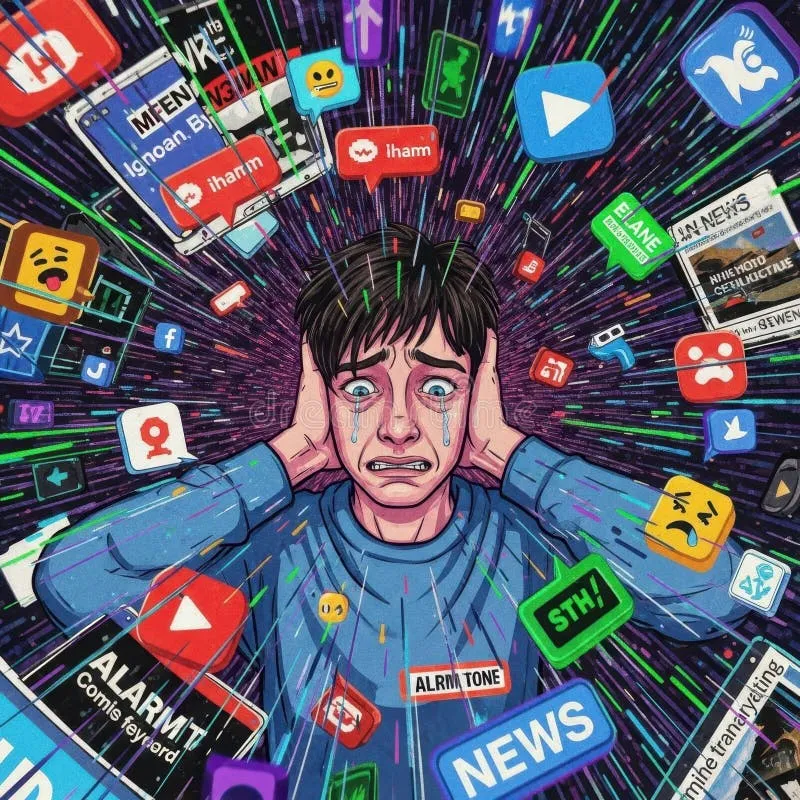
Somewhere between your third productivity app and your second side hustle, something quietly broke. Not your schedule, not your ambition — something deeper. Call it your ability to just be. And if you've noticed that sitting still for ten minutes without reaching for your phone now feels genuinely uncomfortable, you're not alone. A lot of Americans are waking up to the fact that they've optimized themselves right into a wall.
The good news? The antidote might be the simplest, most countercultural thing imaginable: doing nothing at all.
The Grind Hangover Is Real
For the better part of a decade, hustle culture ran the show. Waking up at 5 a.m. was a personality trait. Keeping a color-coded calendar was practically a moral virtue. The phrase "I've been so busy" stopped being a complaint and became a humble-brag. Somewhere along the way, rest got rebranded as failure.
But the backlash has arrived, and it's loud. Searches for "quiet quitting," "slow living," and "doing nothing" have spiked consistently over the past couple of years. TikTok is full of videos where people film themselves staring out a window or lying in the grass — and those videos get millions of views. That's not laziness going viral. That's a collective exhale.
Dr. Mary Helen Immordino-Yang, a neuroscientist at the University of Southern California, has spent years studying what happens to the brain during unstructured downtime. Her research points to something fascinating: when you're not actively doing anything, your brain's default mode network kicks in. This is the part of your brain responsible for self-reflection, emotional processing, and creative problem-solving. In other words, your brain does some of its most important work precisely when you stop working.
"Rest isn't the absence of productivity," she's noted in her research. "It's a different kind of productivity — one that our culture has systematically undervalued."
When 'Lazy' Became a Compliment
The reclaiming of laziness as a badge of honor is one of the more interesting cultural flips happening right now. It's showing up in books like Jenny Odell's How to Do Nothing, which became something of a manifesto for people who felt suffocated by the attention economy. It's in the "bed rotting" trend that Gen Z popularized — the practice of spending intentional hours in bed, not sleeping, just existing — which older generations clutched their pearls over before younger people patiently explained: this is recovery, not failure.
And honestly? They have a point.
The American work ethic is deeply embedded in the national identity. We've built entire mythologies around bootstrap hustle, the self-made person, the idea that idle hands are the devil's workshop. But that framework was designed for a world that didn't include always-on smartphones, 24-hour news cycles, and the expectation that you're reachable at literally any hour. The mental load has multiplied while the cultural permission to decompress has barely budged.
That mismatch is what's making people crack.
What Unstructured Time Actually Does to You
Here's the thing nobody tells you about boredom: it's not a bug, it's a feature. When your brain isn't being fed a constant stream of input — notifications, content, tasks, conversations — it starts doing something remarkable. It wanders. And that wandering isn't wasted time. Research consistently shows that boredom is a precursor to creativity. It's the mental state that forces your brain to generate its own stimulation, which often looks like new ideas, unexpected connections, and genuine insight.
Sandi Mann, a psychologist at the University of Central Lancashire who has studied boredom extensively, found that people who were deliberately bored before a creative task performed significantly better than those who weren't. Your brain, it turns out, needs the fallow period.
Beyond creativity, unstructured time plays a crucial role in emotional regulation. When you never give yourself space to process what's happening in your life — and most of us are running too fast to do that — emotions don't disappear. They pile up. The anxiety that feels like it came out of nowhere? A lot of therapists will tell you it's often just backlogged emotional material that never got airtime.
Scheduling nothing, weirdly, is how you make room for all of that.
The Radical Calendar: Protecting Your Blank Space
So what does intentional idleness actually look like in practice? It's probably not what you think. It doesn't require a meditation retreat in Vermont or a digital detox cabin in the woods (though, respect if you've done either). It can be embarrassingly simple.
It might look like a Sunday morning with no plans and a firm commitment to keep it that way. A lunch break where you sit outside without your phone. A twenty-minute window after dinner where you literally just sit and let your mind go wherever it wants. The key word is intentional — this isn't scrolling on the couch, which is a whole different kind of numbing. It's choosing to give your brain genuine white space.
Culture observers who track wellness trends have noted a shift in how Americans talk about their weekends. There's a growing conversation around "calendar minimalism" — the practice of actively resisting the urge to fill every free hour with plans, classes, events, or social obligations. It's not antisocial. It's protective.
One thing that helps: treating your unstructured time with the same seriousness you'd treat a meeting. Block it off. Decline things that encroach on it. Tell people you're busy — because you are. You're busy doing nothing, and that's finally starting to count for something.
Permission Granted
Maybe the most radical thing about this whole movement is what it's really asking for: permission. Not a new system, not a better app, not another framework for optimizing your rest (please, not that). Just permission to stop. To be bored. To stare at the ceiling without immediately reaching for your phone to escape the discomfort of stillness.
That discomfort, by the way, is worth sitting with. It usually means something is trying to surface — a feeling, an idea, a question you've been too busy to ask yourself. The fact that doing nothing now feels almost transgressive says everything about where we've landed as a culture.
Boredom isn't the enemy of a good life. It might actually be one of the last honest signals your brain sends you before it gives up trying. When you're bored, you're present. And presence — real, unmediated, unscheduled presence — is genuinely hard to come by these days.
So go ahead. Cancel something. Sit outside. Watch the clouds do their thing. Let your brain wander off without a destination.
Turns out, the most productive thing you might do today is absolutely nothing at all.