The Many Versions of You: Mapping America's Fractured Online Identities

Photo: Photograph by Mike Peel (www.mikepeel.net)., CC BY-SA 4.0, via Wikimedia Commons
Somewhere between your LinkedIn headline and your Reddit comment history lives the real you. Or maybe neither of those is the real you. Maybe the real you only shows up in a group chat, or in the TikTok drafts folder you've never posted, or in the Pinterest board nobody else can see.
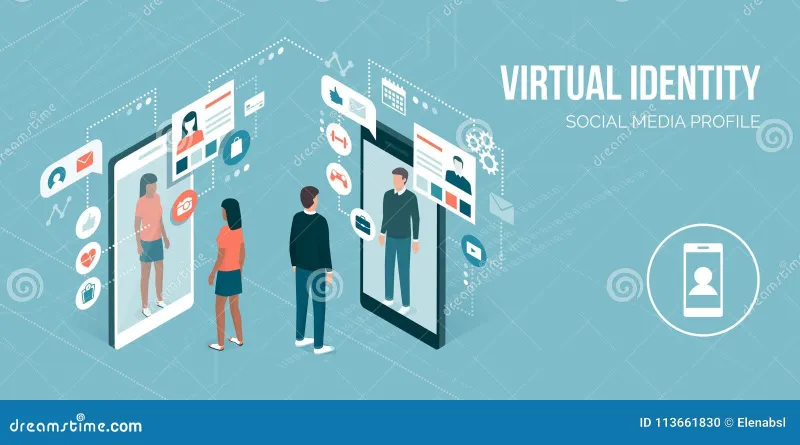
Welcome to the strange, exhausting, kind of fascinating reality of the modern American internet user: a person who isn't just one person online, but several — each one carefully calibrated for a different audience, platform, and set of social rules.
The Platform Sorting Hat
Think about how differently you behave across your various digital homes. LinkedIn is where you deploy the professional voice — thoughtful, ambitious, subtly humble-bragging about a recent project. Instagram is the highlight reel, all golden-hour brunch photos and carefully cropped vacation shots. TikTok might be where you actually have a personality — self-deprecating, weird, willing to say things you'd never put on a resume. And Reddit? Reddit is the confessional booth. Anonymous, candid, occasionally a little too honest.
Each platform has its own unwritten social contract, and most of us have learned — without anyone explicitly teaching us — exactly how to code-switch between them. It happens so automatically that we barely notice we're doing it.
But we are doing it. Constantly.
This Isn't New — But the Scale Is
Sociologists have long understood that humans perform different versions of themselves in different contexts. Erving Goffman was writing about "impression management" back in 1959 — the idea that social life is essentially a series of performances, each one adjusted for the specific stage you're standing on. You act differently at a job interview than you do at a backyard barbecue. That's not dishonesty; that's just being a person.
What's genuinely new is the scale and permanence of it. In pre-internet life, your various social performances were mostly ephemeral. They happened and disappeared. Now every version of yourself leaves a digital record, searchable and potentially permanent. Your LinkedIn connections and your Reddit username and your Instagram followers might never overlap — but they all exist simultaneously, and theoretically, they could all be traced back to you.
That creates a tension that's uniquely modern: you're performing for multiple audiences at once, on stages that could theoretically be linked together, with stakes that range from career consequences to social ostracism.
The Exhaustion Nobody Talks About
Here's what the "personal branding" gurus never mention: maintaining multiple digital identities is genuinely tiring.
Psychologists call it self-monitoring — the ongoing cognitive effort of tracking how you're being perceived and adjusting your presentation accordingly. High self-monitors are actually pretty good at navigating different social contexts. But there's a cost. The constant calibration consumes mental energy, and over time it can erode your sense of who you actually are when nobody's watching.
For a lot of Americans, the pandemic accelerated this fracturing. When the boundaries between work-life and home-life collapsed, so did some of the natural separation between online personas. Suddenly your LinkedIn network could see you in your home office on Zoom. Your Instagram followers knew you were anxious. The walls between the different versions of you got thinner, and for many people, that felt deeply uncomfortable.
Jamal, a marketing manager in Chicago who asked to use only his first name, describes it bluntly: "I have a whole persona on LinkedIn that honestly feels like a character I play. And then I'm on Reddit talking about how burnt out I am in the same industry I'm cheerfully posting about on LinkedIn. At some point it started to feel kind of schizophrenic."
Why We Keep Doing It Anyway
So if it's exhausting, why don't we just... consolidate? Why not pick one authentic identity and stick with it everywhere?
Partly because the platforms themselves don't want you to. Each social network has a strong financial incentive to keep you performing within its ecosystem, and they've designed their algorithms and social norms to reward platform-specific behavior. Authenticity that works on TikTok looks bizarre on LinkedIn. Vulnerability that earns you Reddit karma could tank your professional reputation on a public Facebook post.
But there's also something deeper going on. Many people find genuine value in the separation. Having a space where you're professionally polished and a space where you're completely anonymous gives you range. You can explore ideas, vent frustrations, or try on different aspects of your personality without the whole package being on display at once.
"I think people assume fragmentation is always a bad thing," says one behavioral researcher who studies digital identity. "But compartmentalization can be healthy. You don't take your work self to your therapist. Why would you take your Reddit self to a job interview?"
The Authenticity Debate
There's a growing cultural backlash against the curated, aspirational self — a hunger for something that feels more real. You see it in the rise of "deinfluencing" content, in the popularity of raw, unedited TikToks, in the weird appeal of people oversharing in ways that feel almost aggressively un-polished.
But here's the thing: even "authentic" content is a performance. The carefully disheveled "no-makeup" selfie is still a selfie. The vulnerability post about mental health struggles is still edited before it's published. The rawness is real, but it's also curated. Authenticity online isn't the absence of performance — it's just a different kind of performance, one that signals "I'm not trying too hard."
Which raises an uncomfortable question: is a unified online identity even achievable? Or is the idea of one true, consistent digital self just another thing we've inherited from a pre-internet world that no longer applies?
Living With the Fragments
Maybe the goal isn't to collapse all your online selves into one. Maybe it's just to be more conscious about the versions you're performing and why.
The people who seem to navigate this best aren't the ones who have a single, seamless personal brand. They're the ones who know which version of themselves they're showing up as at any given moment, and who feel reasonably okay about that choice. They're not accidentally leaking their Reddit persona into a professional context, or vice versa. The fragmentation is intentional rather than chaotic.
And honestly, that kind of self-awareness — knowing that you contain multitudes and being deliberate about which multitude shows up where — might be one of the defining life skills of the internet age.
You're not fake for having different faces online. You're just very, very human.