The Laundromat Is the Last Honest Room in America
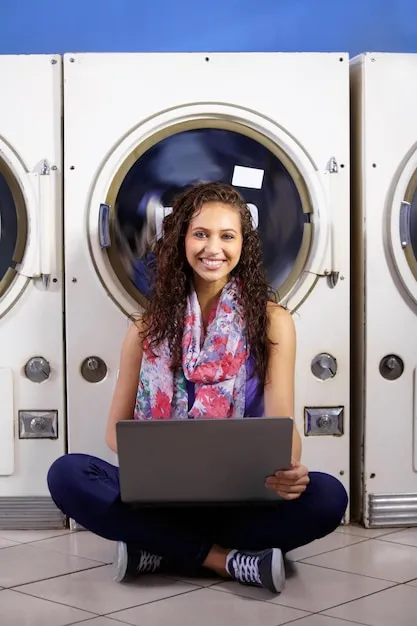
Photo: person with laptop sitting in laundromat with washing machines, via img.freepik.com
There's a specific kind of peace that exists only in a laundromat at 2 p.m. on a Tuesday. The dryers hum. A soap opera nobody's watching plays on the mounted TV. A guy in pajama pants folds an entire comforter with the focus of a surgeon. And you — laptop open, third coffee of the day going cold — realize you've been here for four hours and nobody has asked you to leave.
Welcome to America's least glamorous, most functional third place.
The Death of Hanging Around
Ray Oldenburg, the sociologist who coined the term "third place," meant somewhere that isn't home and isn't work — the barbershop, the bowling league, the diner booth you occupy for two hours over one refill. These places had a magic property: they let you linger. No purchase clock, no hostess giving you the eye, no expectation that you'd be productive.
Most of those rooms are gone or gated now. Malls hired security to move teenagers along. Coffee shops installed one-hour parking signs and outlets that don't work. Even public libraries — the true last holdout — are dealing with reduced hours and staff shortages in half the country.
And then there's the laundromat. Open late. Cheap to occupy. Indifferent to your presence in the best possible way. Nobody there cares what you're doing, why you're there, or how long you stay. It is, in a strange way, the most freedom you can buy for the price of a wash cycle.
The Remote Work Migration
Ask around any mid-city laundromat on a weekday and you'll find a new species: the remote worker who left their apartment because the walls were closing in. Cafés got too loud, then too judgmental — you can only nurse a cold brew for so long before the barista's patience becomes a visible line item. Coworking spaces charge $300 a month to sit in a room that feels like an airport lounge.
The laundromat charges nothing. The noise is white and forgiving. There's a rhythm to the place — wash, dry, fold — that gives your workday a spine it didn't have at home. Some regulars describe it as "body doubling," the productivity trick of doing tasks alongside other people. Others just say it feels like being around humans without having to talk to them, which honestly might be the most American desire of the decade.
Chains Are Catching On
Here's where it gets interesting. The big players noticed. Laundromat franchises are redesigning with loitering in mind: better lighting, actual seating, USB ports, kids' corners, coffee kiosks. Some new locations in Texas and Arizona look more like WeWork with washing machines than the fluorescent liminal spaces of the 1990s.
Bowling alleys are undergoing the same glow-up, rebranded as "entertainment venues" with craft beer and shuffleboard — an attempt to rebuild the leagues that once filled them every Tuesday night. Barbershops, especially in Black and Latino neighborhoods, never really lost their role as community hubs, and everyone from podcasters to city councils is finally acknowledging it.
The pattern is clear: the places that survived are the ones where hanging out was the point, not a bug.
What We Actually Lost
The sad part of this renaissance is why it's needed at all. Unowned public space — the plaza, the porch, the stoop, the park with actual benches — has been designed out of American life, one hostile architecture decision at a time. What's left is either commercial (you're welcome as long as you're spending) or private (you're welcome as long as you're invited).
The laundromat sits in a loophole. It's commercial, but the business model doesn't care about you. It's semi-public, but nobody's monitoring behavior. It's a room where being there is enough.
Maybe that's the lesson hiding in the lint tray. We don't need fancier third places. We need rooms that don't ask anything of us. Until America figures out how to build those on purpose, we'll keep finding them by accident — between a spinning dryer and a stranger folding towels, both of us just glad to be somewhere that lets us stay.